
Perimeter fencing
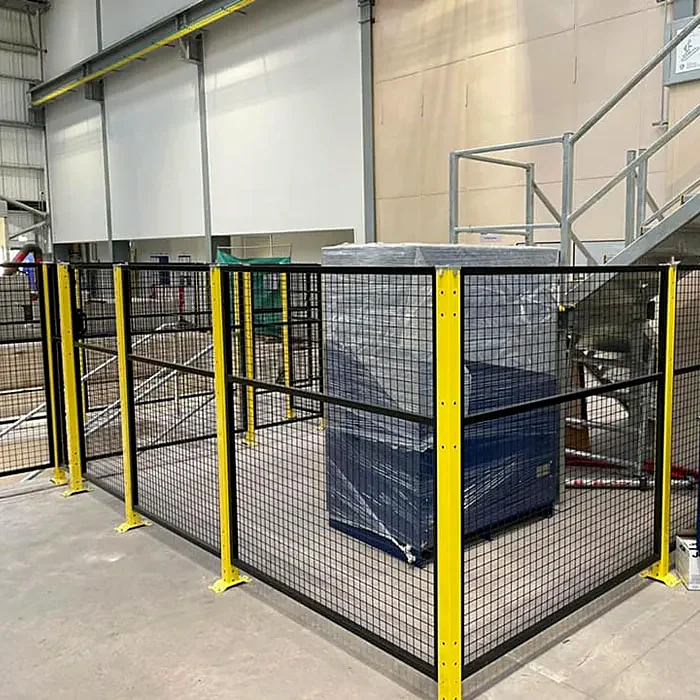
Mesh or solid panels positioned to prevent reach while accounting for robot and process hazards.
Robotics & automated cells
Fencing, controlled access, material interfaces, presence sensing and restart behaviour engineered around the complete robotic process.
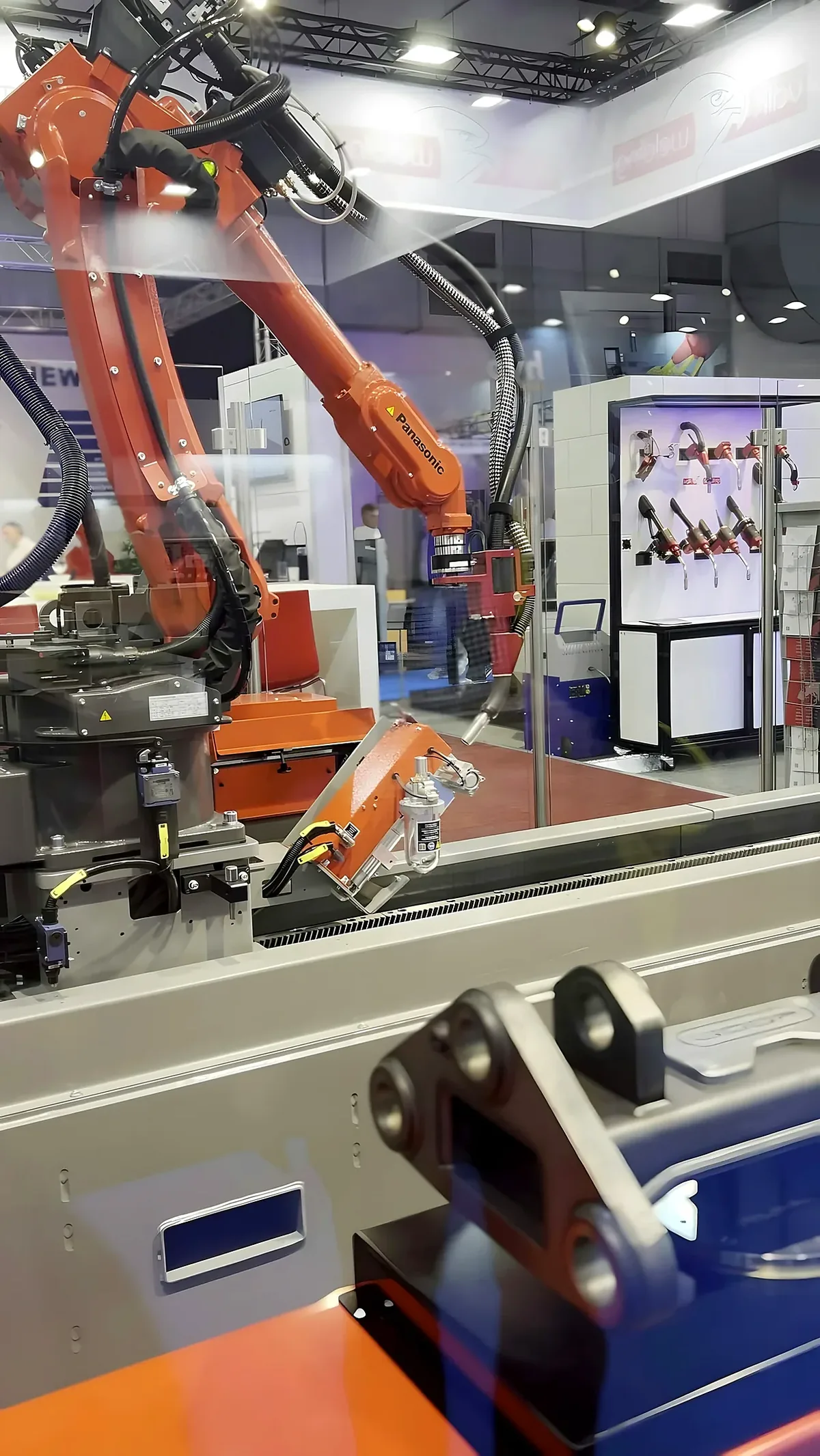
Robot-cell guarding separates people from hazardous robot movement and associated process risks. The safeguarding concept may combine fixed perimeter fencing, interlocked or locked gates, protective devices, emergency stops, safe robot functions and controlled reset. It must address the robot, end effector, payload and process as one cell.
Complete cell boundary
Tooling, payloads, fixtures, conveyors and surrounding machines can create hazards beyond the robot manufacturer’s envelope.
We define the cell boundary using the robot’s maximum and restricted spaces, foreseeable path errors, stopping performance, load behaviour and process hazards. The layout must also support teaching, recovery, tool change, inspection and maintenance without encouraging unsafe shortcuts.
Safeguarding architecture
Each measure has a defined role; effectiveness comes from the way they work together.
Mesh or solid panels positioned to prevent reach while accounting for robot and process hazards.
Personnel and maintenance gates monitored or guard-locked with escape and whole-body entry considered.
Presence-sensing devices positioned from stopping performance, field geometry and approach routes.
Pallet, conveyor and chute openings engineered to pass product without creating uncontrolled person access.
Safe stop, speed, position or workspace functions coordinated with the overall cell risk-reduction strategy.
External reset, visibility, personnel keys or sensing used to reduce the risk of restart with someone inside.
Robot cell layout
The fence must remain outside the hazardous area but close enough to preserve productive floor space and effective supervision.
The volume robot moving parts can sweep as defined by the manufacturer.
The portion limited by rated soft or mechanical means where applied.
The movement actually required to perform the programmed task.
The space defined by perimeter safeguards and other protective measures.
Transfer openings
A pallet or product aperture is part of the perimeter and must receive the same engineering attention as a personnel gate.
We examine reach through the opening, conveyor height, product gaps, empty pallet conditions, gaps below loads and the possibility of climbing or crawling through. Depending on the process, the solution may combine physical tunnels, restricted geometry, monitored devices, muting, sequenced shutters or zone control.
Typical project questions
The quality of the guarding concept depends on accurate robot, process and operational information.
Frequently asked questions
Not necessarily. The safeguarding concept depends on the robot, tooling, payload, speeds, process hazards, collaborative functions, access pattern and foreseeable misuse. Some applications combine fixed fencing with presence-sensing devices or speed-and-separation functions; others require a complete physical boundary.
The guard must remain outside hazardous reach and consider the robot’s maximum space, stopping behaviour, payload, tooling, possible ejection and any movement after a stop command. The final distance is determined through the cell-specific risk assessment and relevant standards.
Transfer openings can use tunnels, geometry, monitored shutters, light curtains, scanners, muting or sequenced devices. The design must allow intended product flow without providing a route for a person to reach or enter the hazard zone.
The cell should remain in the defined safe state until the person has left, access is closed, any presence-management measures are satisfied and a deliberate reset is made from a suitable position. Reset must not itself initiate hazardous movement.
Yes, subject to a survey of the robot, tooling, process, control architecture, current guarding, access tasks and documentation. A retrofit may include fence changes, new gates, interlocks, presence sensing, reset controls and safety-logic modifications.
Start with the hazard and access task
Send a layout, photographs or a short description. Our engineering team can advise whether a desktop review, site survey or defined quotation is the right next step.
The installed perimeter can remain physically intact while the task inside it changes. A new gripper, larger load or revised material opening should trigger a review of the assumptions behind the safeguarded space.
Record robot program changes alongside end-effector dimensions, workpiece overhang and carried services. Compare these with the documented cell layout and permitted operating modes. The previous production path alone is not evidence that the changed application remains inside its assessed boundary.
Assess product transfer with a full load, an empty carrier and a stopped or interrupted transfer. Keep the person-access question separate from the requirement to pass materials. A conveyor opening that looks occupied during normal production may be exposed during a gap or changeover.
A new fixture or stack of materials may obscure an area previously visible from the reset location. Record entry tasks, escape needs and the means used to prevent hazardous restart with someone inside. These decisions require the cell-specific risk assessment, including connected equipment and stored energy.
Update the layout, affected safety functions and operating instructions, and identify the verification needed before release. Keep obsolete drawings distinguishable from the current configuration. This gives future maintenance and improvement work a clear starting point instead of relying on memories of the original installation.
Review industrial perimeter guarding
Further reading: HSE PUWER overview.