
Machinery and hazards
List every machine, linked process and hazard inside the boundary, including foreseeable intervention and stored energy.
Buyer and engineer resource · UK
Define the fence line, panels, posts, access gates, safety interfaces and delivery responsibilities needed for a clear machine-guarding quotation.
The short answer
Panels, posts and gates matter, but they must be coordinated with the hazards, access tasks, material flow, stopping behaviour and the site where the system will be installed.
Use this checklist to prepare a request for quotation, compare supplier scopes or review an early design. If information is unknown, mark it for confirmation rather than hiding it behind a generic requirement.
Specification headings
Record what is known, who owns each decision and what must be verified during survey, design or commissioning.
List every machine, linked process and hazard inside the boundary, including foreseeable intervention and stored energy.
Show dimensions, hazard positions, walls, columns, services, routes and the basis for height, aperture and stand-off.
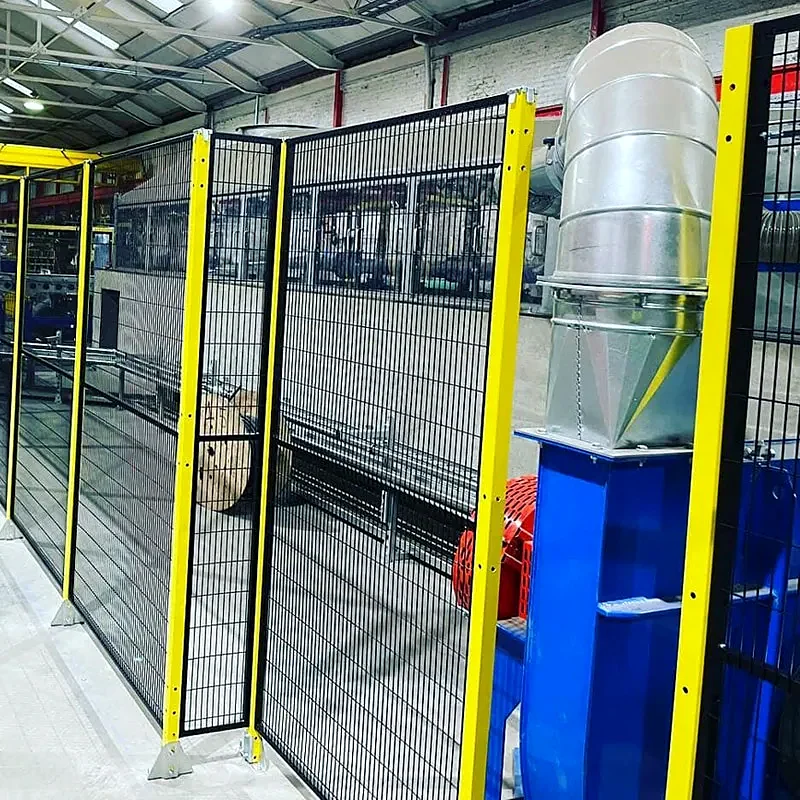
Define mesh or solid infill, finish, frame, floor clearance, fixings, removable sections and custom close-outs.
State opening size, swing or slide direction, frequency, carried items, escape, visibility and vehicle interaction.
Capture load envelopes, transfer method, reach route, abnormal conditions and the intended safeguarding measure.
Define safe state, run-down, reset, unexpected restart prevention, escape and control-system responsibilities.
Record floor condition, hygiene or corrosion needs, access, permits, production restrictions and shutdown window.
Agree drawings, inspections, functional tests, records, manuals, training, labels and residual actions.
Access-point schedule
A gate or conveyor aperture is where production needs and safeguarding most often meet.
Give each opening a reference on the layout and record the task, user, size, frequency and safety response. This makes supplier assumptions visible and helps controls, mechanical and production teams review the same design.
| Opening ID | Unique reference linked to the layout and equipment zone. |
|---|---|
| Purpose | Operation, replenishment, fault recovery, maintenance, pallet or product transfer. |
| Envelope | Clear width and height, carried item, vehicle, pallet or product extremes. |
| Frequency | Expected entries or transfers per shift and likely abnormal use. |
| Safety response | Interlocking, guard locking, isolation, sensing, muting or restricted geometry. |
| Restart | Reset location, visibility, escape and prevention of unexpected movement. |
Supplier comparison
Ask each proposal to identify who surveys, designs, approves, installs, integrates, tests and provides the evidence.
Frequently asked questions
It should define the machinery and hazards inside the boundary, fence layout and construction, access gates, process openings, interlocking and control requirements, environment, installation constraints, documentation, testing and responsibilities. The specification should describe the required safeguarded outcome, not only list panels and posts.
No. Overall photographs, a marked-up layout, approximate dimensions and a description of access and material flow are normally enough to start. A survey can then confirm dimensions, interfaces and constraints before manufacture.
Yes, where movable guards form part of the safety strategy. Define the intended safe state, whether guard locking may be needed, stopping behaviour, reset and restart arrangements, escape needs, control-system interface and who is responsible for design, installation and validation.
Record the minimum and maximum load envelope, direction and method of transfer, access route through the opening, abnormal conditions, required protective measures and recovery method. The opening must support product flow without leaving an uncontrolled route to the hazard.
Check the installed layout against approved drawings, fixings and close-outs, gates and escape arrangements, safety-device operation, stopping and restart behaviour, labels, documentation, agreed test records and any residual actions or exclusions.
Turn the checklist into a project scope
Send the information you have. We will identify gaps, recommend the next engineering step and prepare a project-specific proposal.
A perimeter-guarding project may be installed across several shutdowns while neighbouring equipment remains in use. The final layout alone does not explain the conditions between those phases. Ask the project team to define which machinery belongs to each stage, which interfaces are completed together and what evidence is required before that stage is accepted.
Mark the phased boundaries on the layout and identify shared access points, conveyors and controls. A gate or transfer opening serving two areas needs a named design owner even when its installation falls between separate contracts. Any temporary arrangements and the decision to keep equipment in service must be assessed by the responsible site and machinery-safety teams; the installation schedule should not imply approval by itself.
Include a handover record for each completed stage, with remaining work and affected interfaces clearly identified. Retain the final combined review once all stages are connected. This makes production planning and supplier quotations more precise without assuming that a partially installed system provides the intended finished protection. Send the shutdown sequence alongside the fence layout when requesting a perimeter-guarding specification review.
Yes where stages are released separately. Each stage needs a defined machinery boundary, completed interfaces and agreed acceptance evidence.
An identified responsible designer or integrator should coordinate it; the interface must not be left between supplier scopes.
Plan guarding design and installation Define guarding integration responsibilities