
Motors, chains & sprockets
Local fixed protection and perimeter positioning coordinated to prevent access from the side, rear or below.
Material handling & production flow
Protect drives, transfers, underside access and automated work zones while preserving the product flow and interventions your line depends on.
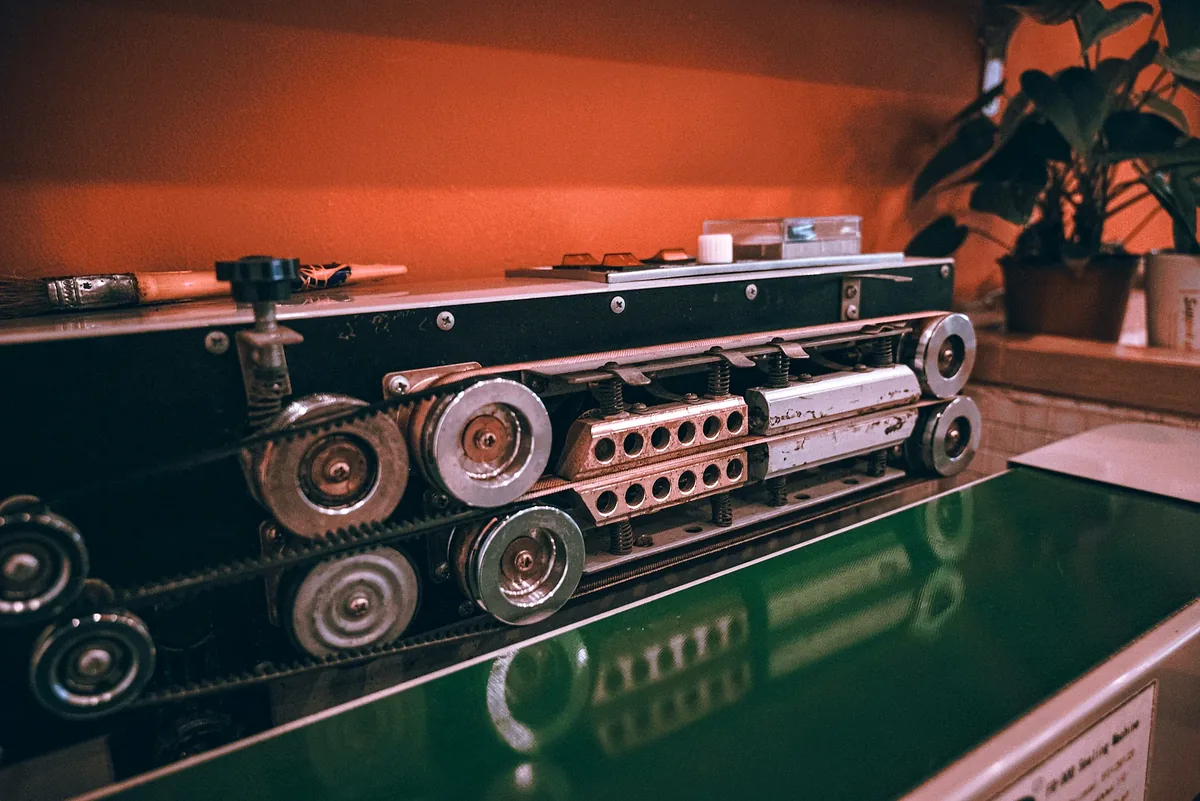
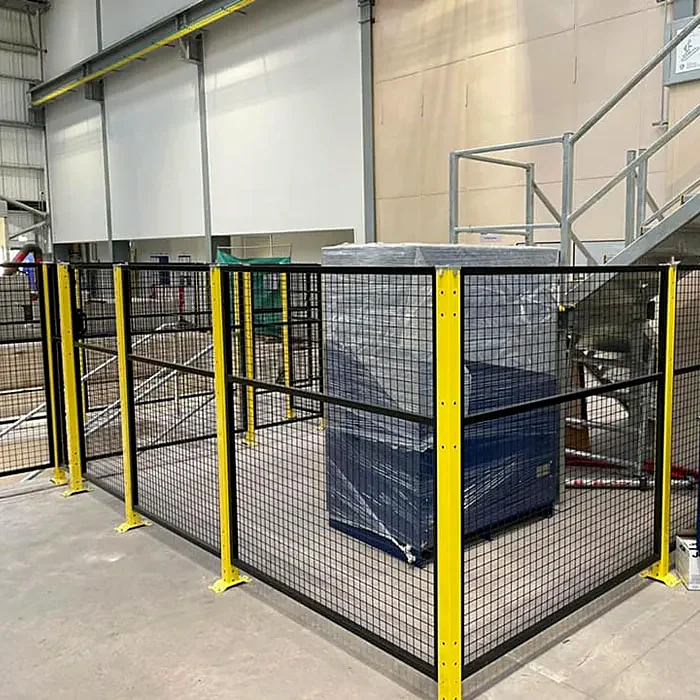
Conveyor perimeter guarding creates a controlled boundary around hazardous movement and automated interfaces. It often works with local fixed guards at drives and nip points, carefully engineered product openings, interlocked access and safe methods for clearing faults, cleaning and maintenance.
Protect the line as a system
Conveyors connect equipment, processes and workstations. That makes their interfaces as important as the individual machines.
We trace access to in-running nips, chains, rollers, drives, transfers, lifts, pushers and automated handling equipment. The perimeter is then developed around the real production route, including loading, reject removal, inspection, cleaning, jam recovery and engineering access.
Key interfaces
Product openings and maintenance gaps are common weak points in otherwise substantial fencing.
Local fixed protection and perimeter positioning coordinated to prevent access from the side, rear or below.
Guard geometry developed around rollers, belts, product gaps and the possible route of hands or clothing.
Tunnels, infills, restricted apertures or protective devices selected for all expected product conditions.
Intervention points designed so common faults can be handled without dismantling unrelated sections.
Safe pedestrian movement around or across conveyor systems considered with the safeguarding boundary.
Floor gaps, elevated sections, supports and access below conveyors reviewed for foreseeable reach and entry.
Product aperture strategy
The largest gap may occur when the conveyor is empty, when products are spaced apart or when an unusual format is running.
We review conveyor height, opening dimensions, reach direction, product spacing, pallet and load geometry, possible climbing and the downstream hazard. Where physical geometry alone cannot achieve the intended protection, sensing or sequenced access may be considered.
| Fixed tunnel | Extends the reach path so the hazardous part remains beyond the relevant safety distance. |
|---|---|
| Restricted geometry | Close-fitting infill around the conveyor and product envelope reduces available access. |
| Light curtain | Detects entry through an open interface; positioning depends on total stopping performance. |
| Muting | Temporarily suspends a protective function for defined material flow using a validated sequence. |
| Monitored shutter | Creates a controlled physical closure or sequenced separation between zones. |
Retrofit projects
Existing conveyors often have local guards, legacy controls and years of operational adaptations.
A retrofit survey records what is actually installed, how operators work, where faults occur and which interventions are frequent. We then define the new perimeter, retain or replace local guards as appropriate, plan access points and identify control modifications.
The change should also consider updated drawings, inspection needs, residual risks and how the modified system will be tested before return to production.
Production tasks
A daily reject-clearance point should not be treated like a panel removed once a year for overhaul.
Loading, unloading, inspection and reject handling without exposure to dangerous parts.
Defined entry and stopping behaviour for blockages, fallen products and sensor faults.
Practical access and isolation for routine hygiene or debris removal.
Space, openings and removable sections planned around tools, parts and safe isolation.
Frequently asked questions
Yes, but the opening must be engineered so product can pass without allowing a person to reach or enter the hazard zone. Solutions may include restricted geometry, tunnels, close-fitting infills, fixed guards, sensing, muting or sequenced devices.
Often they do. A perimeter fence may separate the overall area while local fixed guarding protects specific in-running nips, chains, sprockets, rollers and accessible parts. The design should consider access from every side, including below and through the product opening.
Routine intervention should have a planned safe method. This may use local interlocked guards, controlled gates, isolation points, removable fixed panels or task-specific modes. The required approach depends on the hazard and frequency of access.
Survey and some preparatory work may be possible during production, but floor drilling, installation near live equipment and safety-control changes normally require agreed shutdowns and isolation. A phased plan can reduce disruption while maintaining control of site risk.
Machine safeguarding and workplace traffic segregation are related but different. The project may need both: guarding to control machinery hazards and suitable barriers or route controls to manage people and vehicles around the line.
Start with the hazard and access task
Send a layout, photographs or a short description. Our engineering team can advise whether a desktop review, site survey or defined quotation is the right next step.