
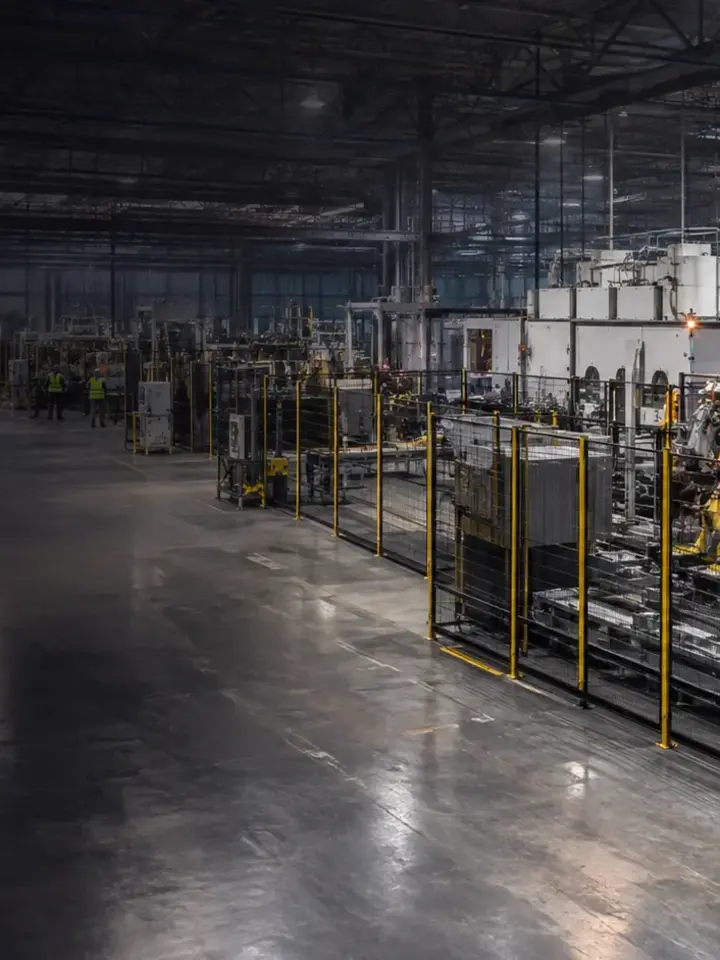
01 / PHYSICAL BOUNDARY
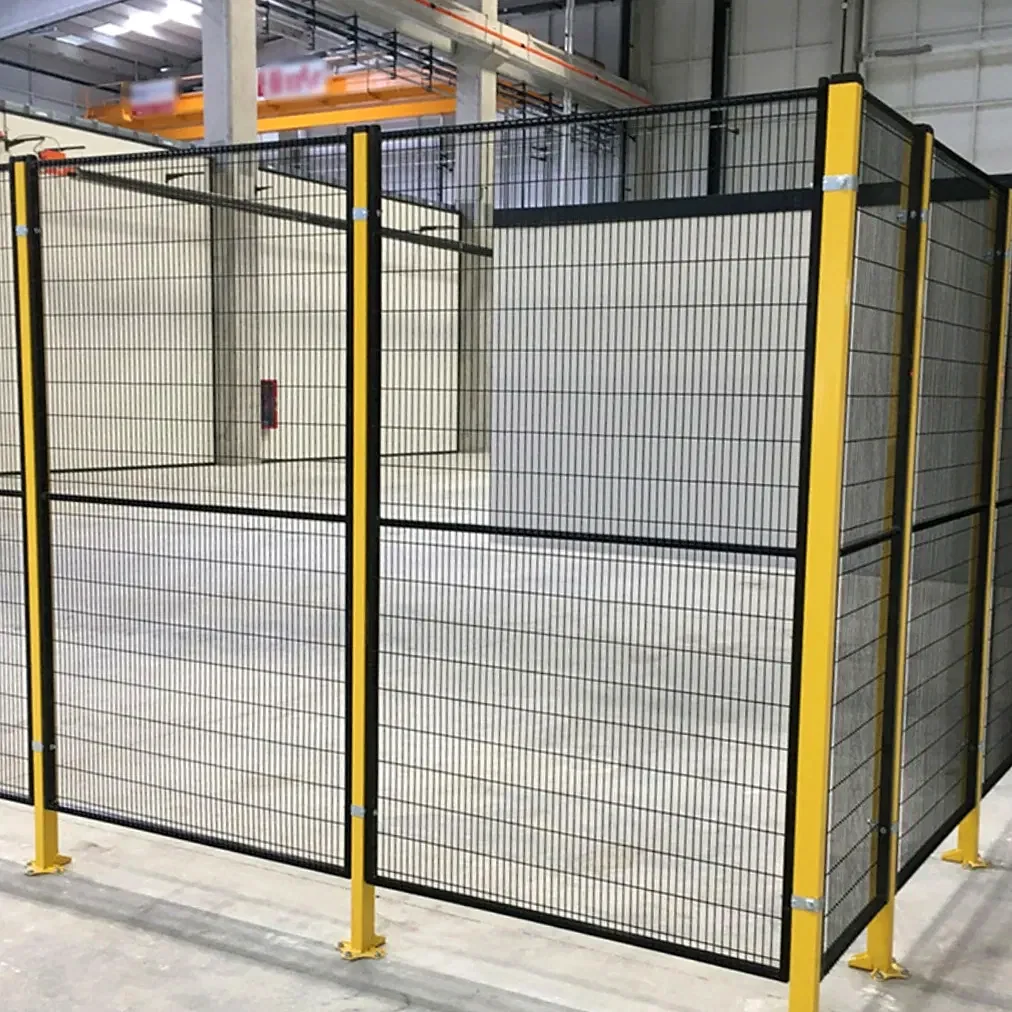
Modular mesh fencing
Rigid panels, posts, corners, infills and fixings laid out to control reach while preserving visibility, ventilation and efficient installation.
Mesh fencing systemsIndustrial safety fencing · Great Britain
Machine safety fencing engineered around your machinery, people and production flow—from modular mesh panels and posts to interlocked access gates and complete safeguarded areas across Great Britain.
More than a line of panels
A perimeter guard only works when its height, aperture, distance, access points and machine response are developed as one system.
Oxford Machine Guarding designs industrial safety fencing around real operating tasks: loading, changeover, cleaning, fault recovery, planned maintenance and emergency escape. We consider every reason people or products cross the boundary before setting the guard line.
Perimeter guarding systems
From a compact machine enclosure to a multi-zone automation line, the system can combine standard modular components with project-specific engineering.
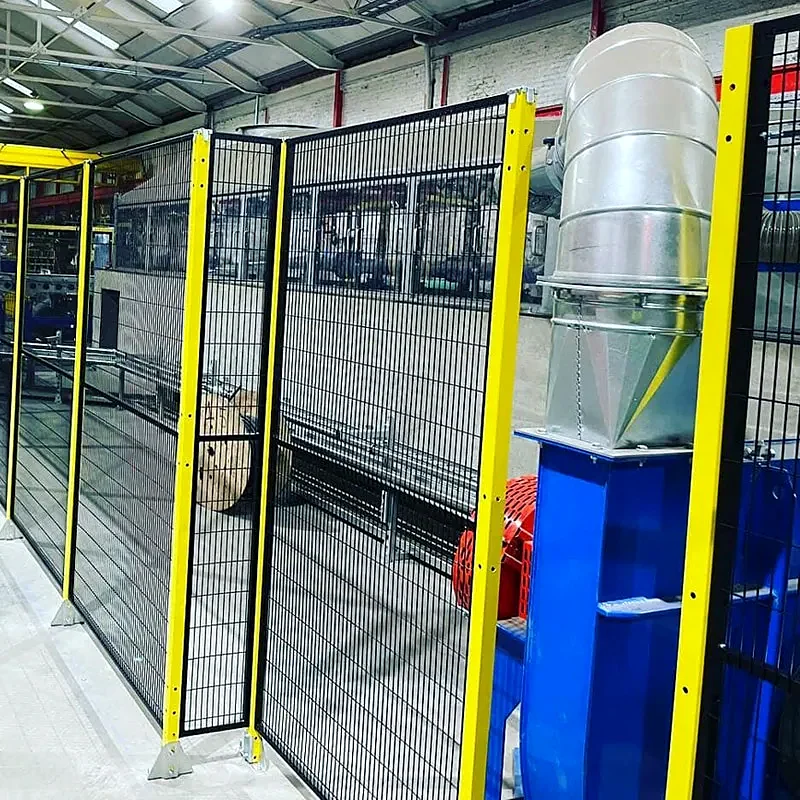
Rigid panels, posts, corners, infills and fixings laid out to control reach while preserving visibility, ventilation and efficient installation.
Mesh fencing systems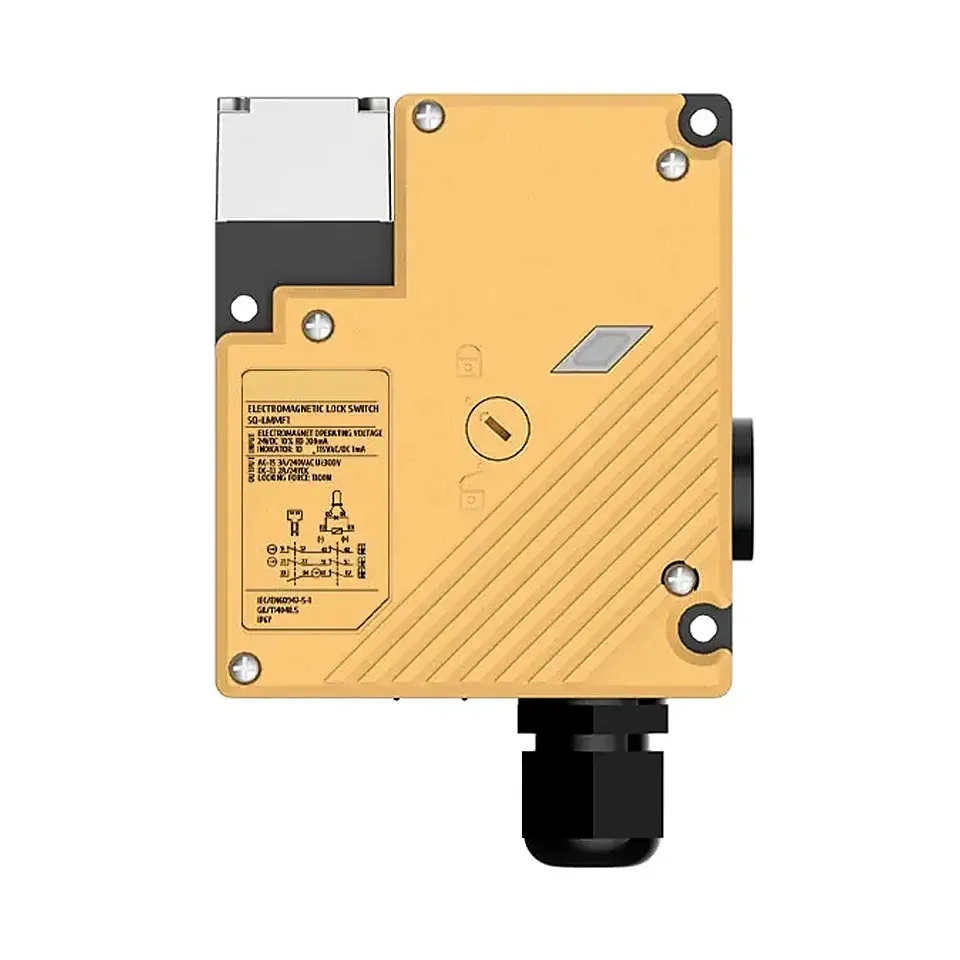
Hinged, sliding or double gates with the mechanical hardware and safety devices required for each access task and stopping condition.
Access and interlocks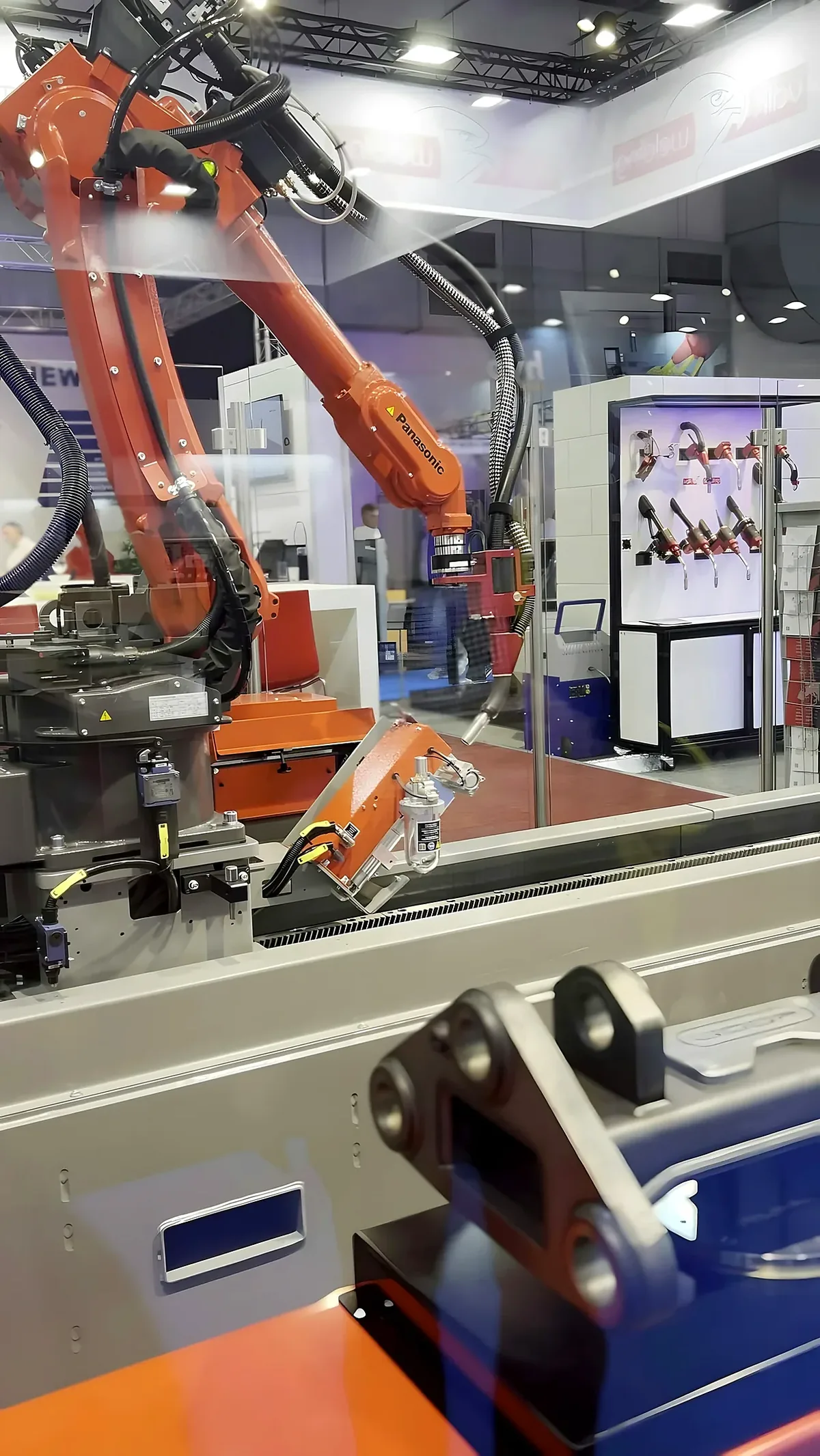
Cell fencing, entry control, transfer interfaces, presence sensing and restart behaviour developed around robot and process hazards.
Robot-cell safeguarding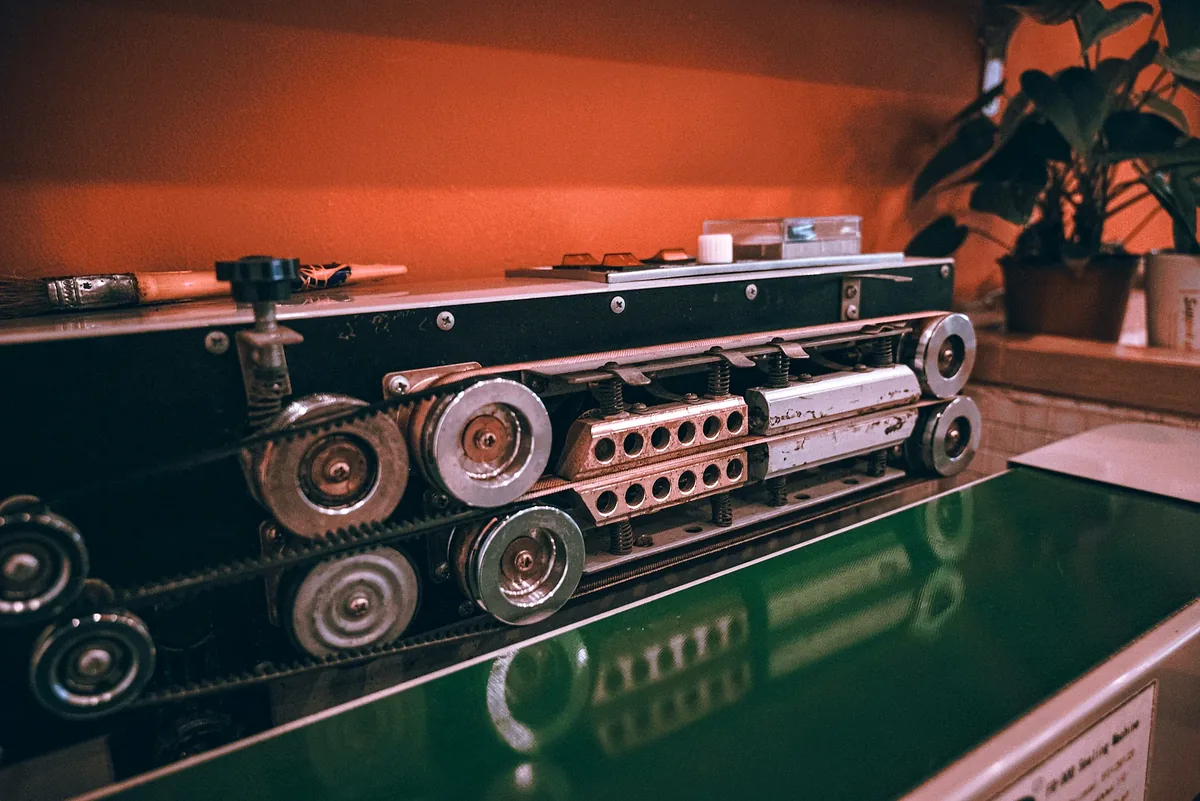
Boundaries around drives, transfer zones, material openings and multi-machine systems without obstructing normal product movement.
Conveyor guarding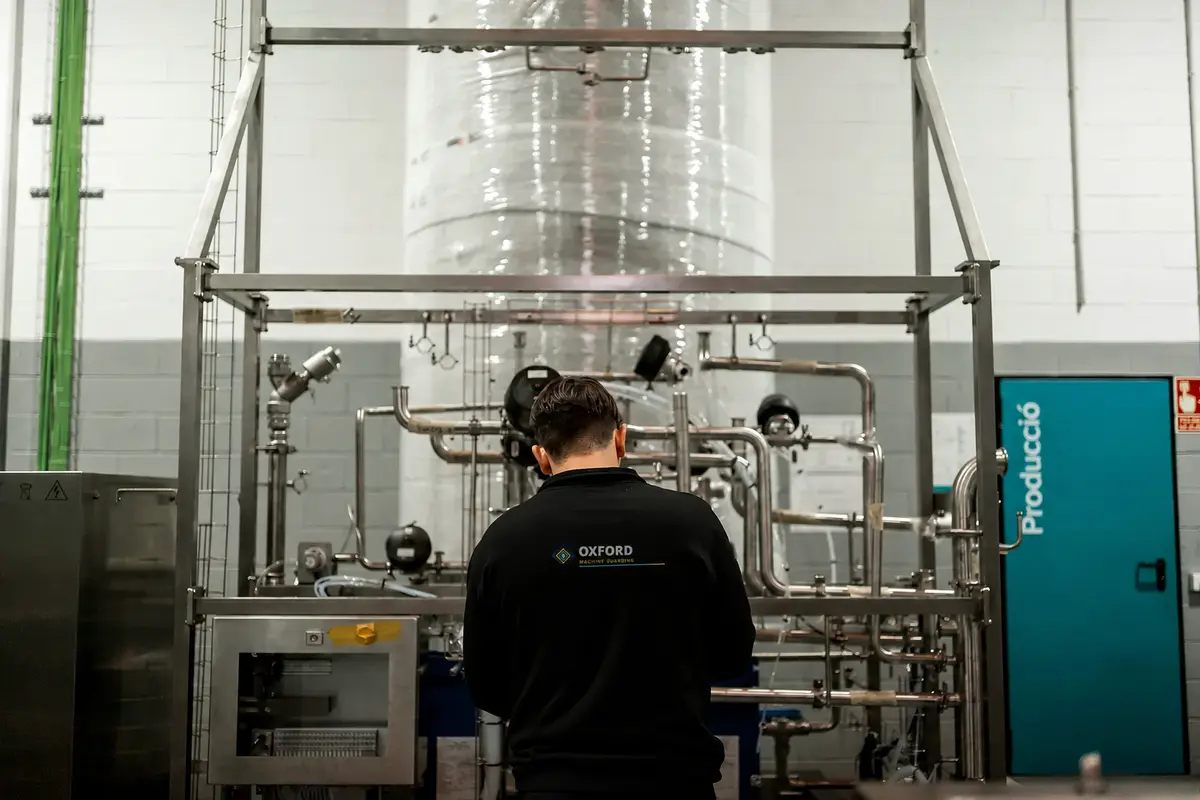
A controlled route from machine survey and guarding concept through detailed design, supply, installation and agreed handover records.
Our delivery process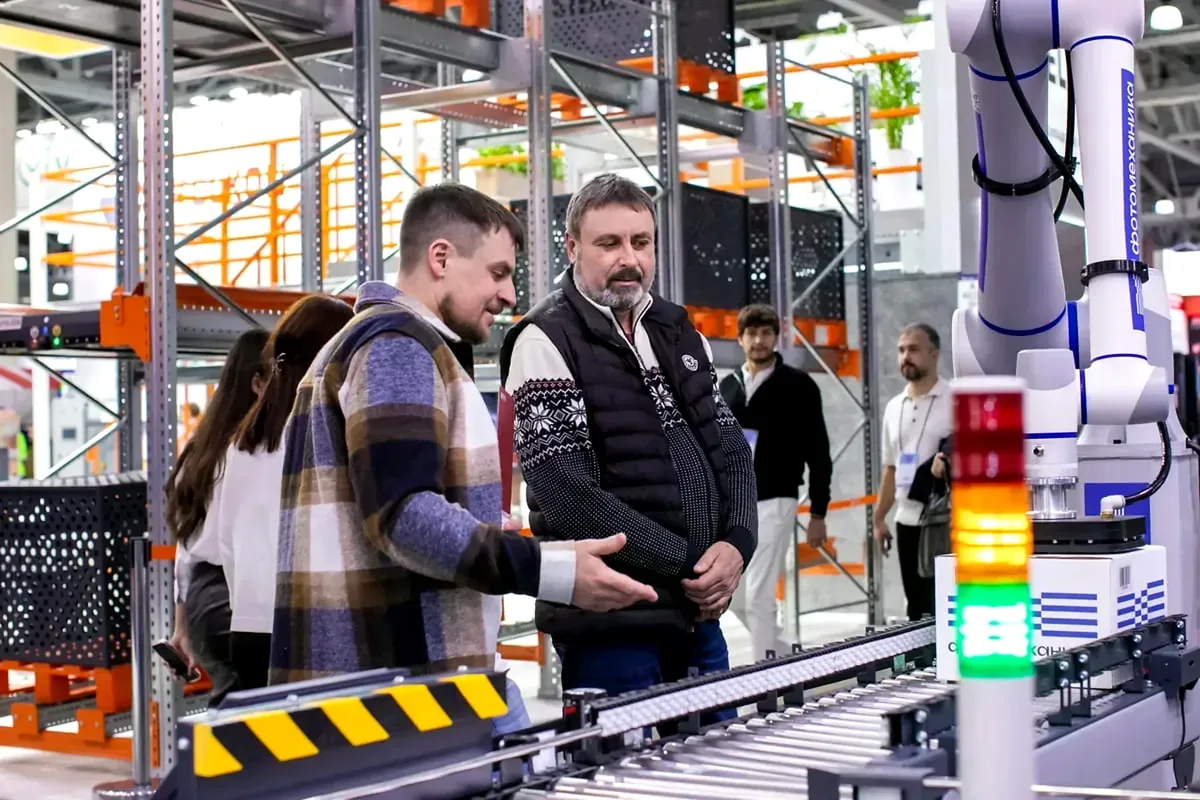
Guard selection informed by the machinery, access route, current standards and the safety functions needed to achieve the project risk reduction.
Standards and compliance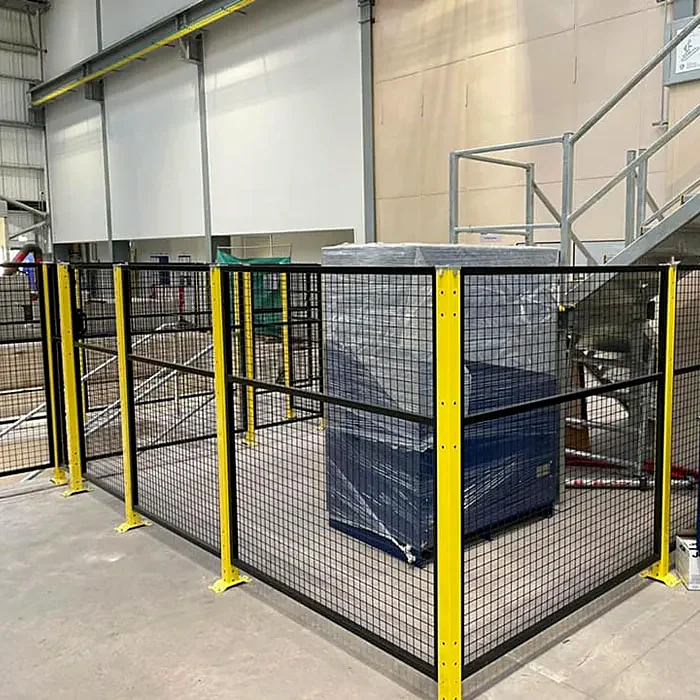
Complete safeguarded area
The fence is the visible element. Safe access depends on how the physical boundary, protective devices, stopping response and human behaviour work together.
Height, aperture, ground clearance, rigidity, finish and stand-off distance.
Gate type, hardware, interlocking, locking, escape and maintenance requirements.
Tunnels, chutes, conveyors, transfer openings, sensing or muting where appropriate.
Stopping, prevention of restart, reset position, diagnostics and validation evidence.
Applications
A project-specific assessment confirms the solution. Typical uses range from single machines to linked production and material-handling systems.
Separation from hazardous movement, tooling, ejection and related process risks.
Robot safety fencingGuarding around indexers, presses, pick-and-place equipment and test stations.
Integrator supportCell boundaries, pallet openings, conveyor interfaces and controlled entry.
Palletiser guardingDrives, transfer points, underside access and product-flow openings.
Conveyor safety fencingAutomated storage, handling zones and defined interfaces with pedestrian routes.
Warehouse automation guardingBoundaries around machining, welding, tending, pressing and handling systems.
Bespoke guardsMachine-group guarding that supports replenishment, changeover and cleaning tasks.
Packaging-line guardingControlled separation from motion, pressure, temperature or application-specific hazards.
Plan a guarding surveyEngineering process
Project boundaries are agreed clearly, with mechanical guarding and safety-system interfaces coordinated from the outset.
Understand the machine, hazards, modes, users and project constraints.
Set the boundary, safe distances, access strategy and system scope.
Develop layouts, details, interfaces, hardware and safety functions.
Coordinate site work, fit the system and integrate agreed devices.
Complete agreed checks, records, drawings and operator information.
Production environments
Our systems are developed for the realities of industrial production: limited floor space, existing services, frequent access and equipment that has to keep delivering.
Engineering basis
Depending on the project, the assessment may reference PUWER and machinery-safety standards covering risk assessment, fixed and movable guards, safety distances, interlocking devices and safety-related controls.
Explore safety standardsHigh-intent project support
New search-led guidance helps buyers move from a broad guarding requirement to the information needed for a practical quotation.
See the dimensions, gates, interlocks, site conditions and documentation that affect project cost.
Prepare a clearer quotationTurn access concerns, damaged guards and PUWER-focused gaps into a prioritised engineering scope.
Plan a guarding surveyResolve restricted geometry, containment, legacy machinery and interfaces beyond standard mesh panels.
Explore custom guardingSafeguard pallet handling, ASRS interfaces, sortation, AGVs and automated material-flow areas.
Explore warehouse guardingControl access around palletisers, wrappers, conveyors and connected end-of-line equipment.
Explore end-of-line guardingCoordinate fencing, access, safety interfaces and guarding evidence within a machine-build programme.
See integrator supportPlanning answers
Answer-first guidance for engineers and buyers comparing layouts, preparing a scope or gathering information for quotation.
Understand how height, mesh aperture, reach routes, floor gaps and stand-off distance work together.
Read the height & distance guideUse a structured checklist for layout, panels, gates, openings, interlocks, installation and handover.
Open the specification checklistFrequently asked questions
It is a physical boundary around machinery or an automated process. A complete system can combine modular posts, mesh or solid panels, fixed sections, access gates, interlocks, guard locking, material openings and reset controls. The final arrangement should follow a project-specific risk assessment.
There is no reliable one-size answer. Height is selected with the guard position, mesh aperture, possible footholds, adjacent structures and the route a person could use to reach the hazard. The relevant safety-distance assessment controls the final dimensions.
Yes. Hinged, sliding and double access gates can be monitored by suitable interlocking devices. Guard locking may be required where the hazard cannot reach a safe state before someone could reach it. The safety-related control function must be designed and validated with the mechanical guard.
Often, yes. A retrofit survey should record the machine condition, operating modes, access tasks, services, controls, stopping behaviour and available floor space. The new boundary must not create unsafe blind spots, trapped-person risks or impractical maintenance access.
Mesh aperture and distance are linked. The larger the opening, the farther the hazard may need to be behind the guard. Selection should be based on the current project standards and the actual reach route—not on a catalogue panel alone.
Oxford Machine Guarding is based in Oxfordshire and supports industrial projects across Great Britain. Scope can include survey, design, supply, installation, safety-system integration, testing and handover.
Send photographs, a basic layout, the machinery or process involved, approximate guarding dimensions, required access points, material-flow openings, known hazards, control-system information and the site location. We can advise if a site survey is needed.
Talk to an engineer
We can usually establish from a short conversation whether you need a desktop review, a site survey or a defined quotation.
Call the engineering team01865 416840 Email project informationsales@oxfordmachineguards.co.ukA perimeter-guarding drawing should show every way people and materials can cross or reach through the boundary. Panel length and gate count are only part of that review. Safeguarding decisions require the machine-specific risk assessment and competent design.
Record loading, adjustment, cleaning, fault recovery and maintenance tasks with their frequency and access route. Show where a person may enter fully or move out of view. The access strategy must address the hazards present during each task and the required control of unexpected movement or energy.
Mark conveyors, pallet transfers, chutes and removable sections on the same layout as pedestrian gates. Review foreseeable reach routes and the conditions when material is absent or mispositioned. Protection at a product opening must be designed for the actual hazard and process; a convenient gap is not an assessed safeguarding solution.
Identify who owns gate monitoring, stop behaviour, escape, reset and restart functions, and how these will be validated together. Record the as-installed boundary and access arrangements. When a conveyor, platform or storage position changes, review its effect on reach, visibility and access before assuming the original layout remains suitable.
Continue with Guarding specification checklist · Compare the complete guarding scope.
The installed perimeter can remain physically intact while the task inside it changes. A new gripper, larger load or revised material opening should trigger a review of the assumptions behind the safeguarded space.
Review industrial perimeter guarding — read the detailed guide