
Welded mesh infill
Aperture, wire construction, panel width and rigidity chosen to suit the safety-distance assessment and environment.
Physical machine boundary
Industrial mesh panels, posts, corners and infills configured to create a rigid, visible boundary around machinery and automated processes.
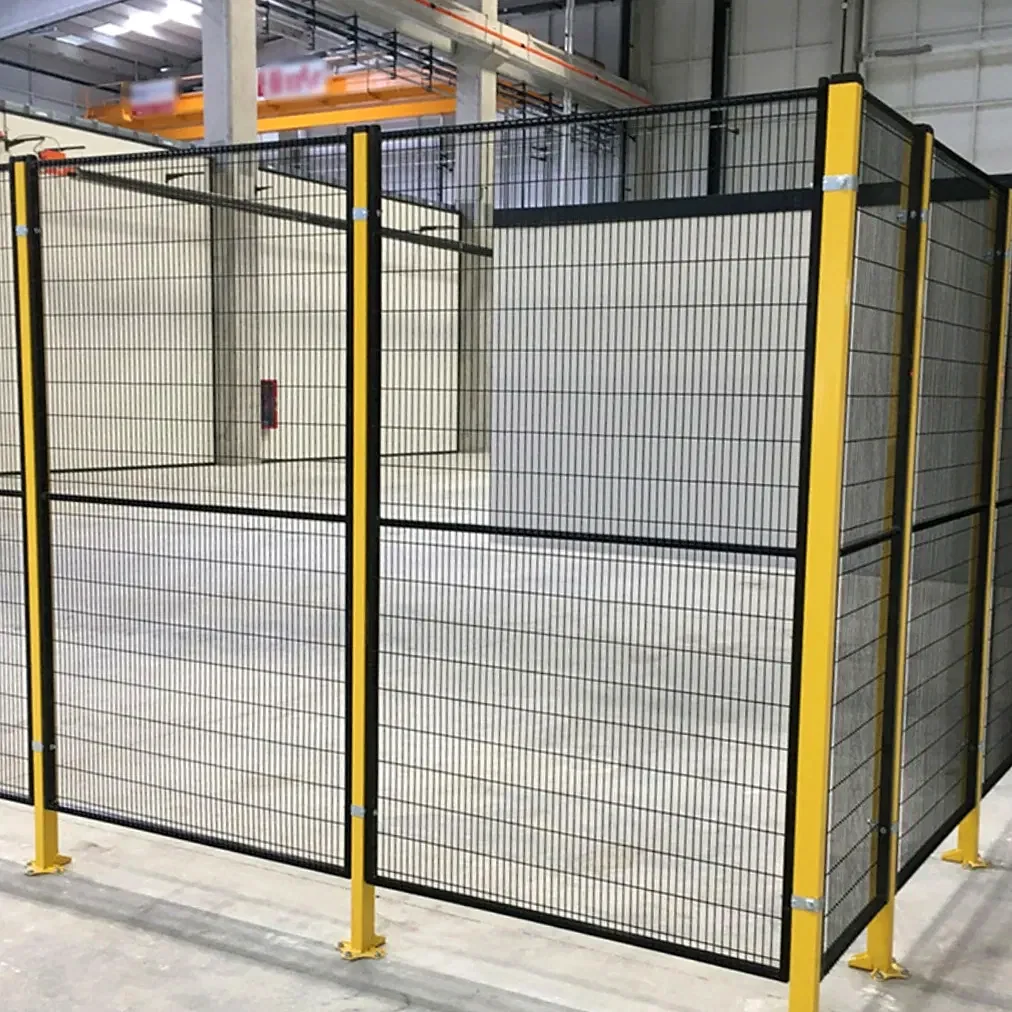
Modular mesh guarding prevents or controls access by placing a physical barrier between people and machinery hazards. The panel height, aperture, ground clearance and distance from the hazard must be selected together; the correct answer comes from the application and risk assessment, not the panel catalogue alone.
Flexible components, engineered layout
Standard panels and posts make the structure efficient. Project-specific decisions make it suitable.
Oxford Machine Guarding develops the fence line around hazardous movement, reach routes, operator walkways, maintenance clearances, material flow, structural features and existing services. The aim is a robust boundary that is practical to inspect, maintain and extend.
System configuration
The final bill of materials follows the approved layout and agreed project boundary.
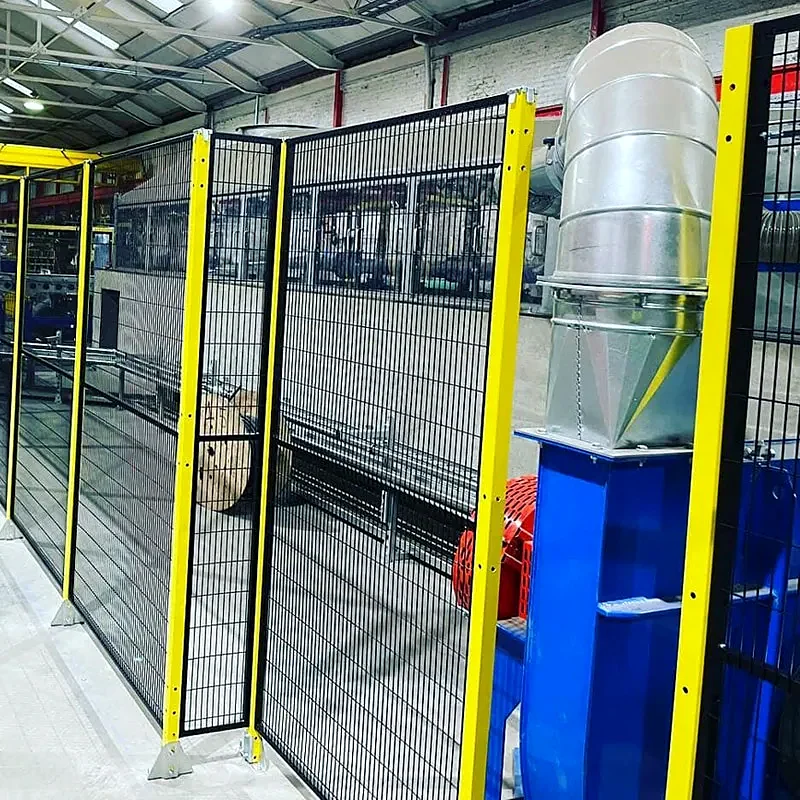
Aperture, wire construction, panel width and rigidity chosen to suit the safety-distance assessment and environment.
Post spacing, floor fixings, corners, levelling and offsets coordinated with the slab and surrounding equipment.
Kick plates or sheet infills where small parts, debris, splash or low-level openings need additional control.
Close-outs around columns, services, conveyor frames and other geometry that standard panels cannot safely address.
Tool-removable sections for infrequent maintenance, with fasteners and handling considered during design.
High-visibility and project-specific colours, with alternative materials or finishes assessed for demanding environments.
Specification decisions
A low fence far from the hazard, a tall fence close to it and a panel with a different aperture are not equivalent safeguards.
We trace possible routes over, under, through and around the proposed boundary. Footholds, platforms, adjacent machinery, cable trays and building features can change the calculation and must be included.
| Panel height | Selected from hazard position, reach route, foreseeable climbing and surrounding access. |
|---|---|
| Mesh aperture | Coordinated with the distance to the nearest hazardous part and the applicable reach assessment. |
| Ground clearance | Controlled to prevent lower-limb access and accommodate real floor conditions. |
| Rigidity | Posts, panels and fixings designed to resist foreseeable loads without opening unsafe gaps. |
| Removal | Fixed sections require a tool; routine access is normally addressed through designed gates. |
| Environment | Corrosion, washdown, hygiene, heat, visibility and containment requirements considered. |
Layout development
Floor space matters, but putting the fence as close as possible to the machine can compromise access, visibility and safety.
Frequently asked questions
No single guard material suits every hazard. Mesh is valuable where visibility and airflow are important, but solid sheet, polycarbonate, acoustic treatment or additional containment may be required for ejection, fluids, sparks, heat, noise or process emissions.
Yes. A planned system can use standard panels with project-specific infills, offset brackets, cut panels and framed service interfaces. Modifications must not create openings or reach routes that defeat the required protection.
Black and safety-yellow arrangements are common, and project-specific powder-coated colours may be available. Finish selection should also consider corrosion, hygiene, washdown, temperature and the customer’s site standards.
Posts are normally secured through baseplates using fixings suited to the slab and loading. The survey should check floor construction, falls, joints, embedded services and the need for levelling or offset details before installation.
Modular systems can often be reconfigured or extended, but any change should be reviewed against the hazards, safe distances, access strategy and control-system behaviour. Moving the fence line can alter the effectiveness of the complete safeguarding system.
Start with the hazard and access task
Send a layout, photographs or a short description. Our engineering team can advise whether a desktop review, site survey or defined quotation is the right next step.