
Older and modified machinery
Replace missing, damaged or unsuitable guards while accounting for current controls, stopping behaviour and routine interventions.
Custom guards for real machinery
Custom fixed guards, machine enclosures and access solutions designed around existing equipment, unusual geometry and the way operators maintain the process.
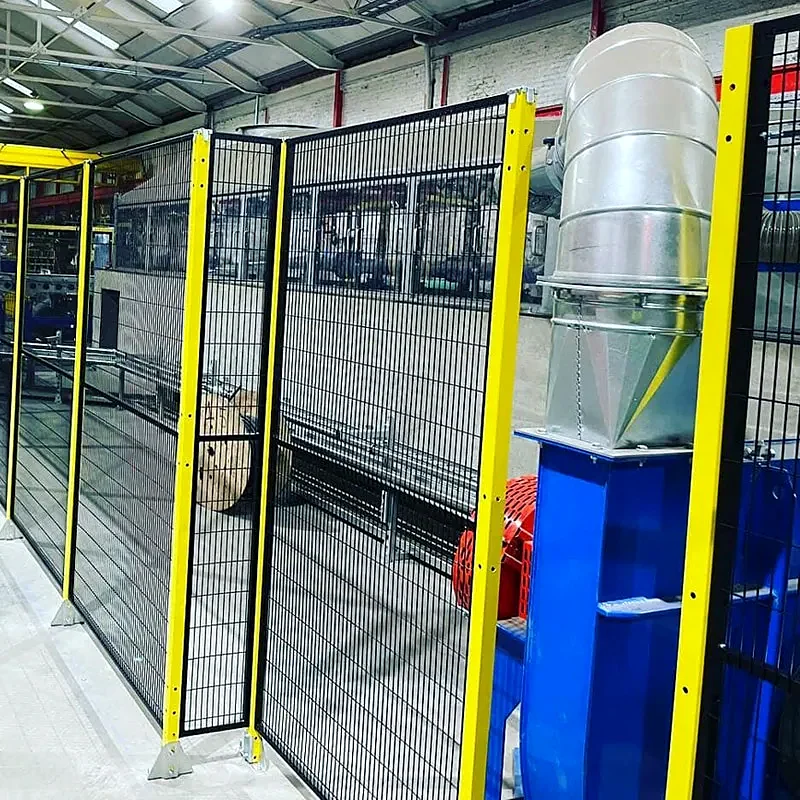
A bespoke machine guard is a protective structure made for a particular hazard, machine and access task. It is normally used where standard mesh panels alone cannot manage ejected parts, fluids, heat, noise, restricted floor space or complex services. The design may combine mesh, sheet, transparent panels, framed doors, infills and interlocking.
When standard panels are not enough
Legacy machinery, tight production areas and process hazards often need a combination of standard components and purpose-designed details.
Oxford Machine Guarding develops custom guard sections around controls, services, tooling changes, product flow and maintenance access. The design boundary, material choice and access method are coordinated so that solving one hazard does not create a new reach route or impractical intervention.
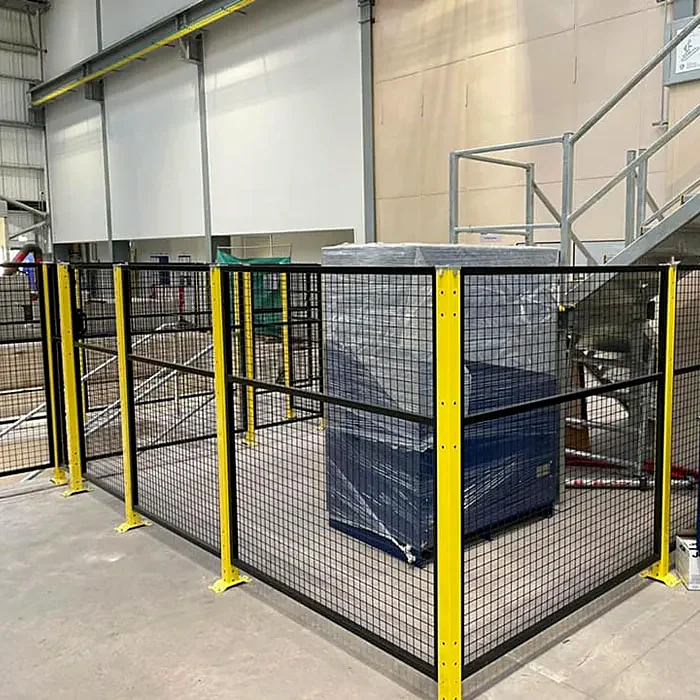
Bespoke guarding applications
The guarding concept follows the machine assessment and required risk reduction; these are common starting points rather than catalogue solutions.
Replace missing, damaged or unsuitable guards while accounting for current controls, stopping behaviour and routine interventions.
Help contain chips, broken tooling, splash or process debris while retaining visibility where suitable for the assessed hazard.
Frames and infills shaped around shafts, motors, tooling, pipework and structural features without leaving unsafe openings.
Door size, movement, hinges, handles, stops and monitoring selected around the task and available space.
Infrequent access planned with retained or suitable fixings, handling space and clear reinstatement requirements.
Mechanical guard details coordinated with interlocks, guard locking, protective devices, reset and machine safe-state behaviour.
Material selection
Visibility is valuable, but the hazard decides whether an open mesh is appropriate.
Mesh supports airflow and supervision. Solid sheet may be needed for containment or light exclusion. Transparent panels can preserve visibility but their material, thickness, fixing and resistance must suit the expected impact, chemicals, temperature and cleaning regime. Mixed systems often provide the most practical result.
| Welded mesh | Visibility, ventilation and efficient modular coverage where reach prevention is the main requirement. |
|---|---|
| Solid sheet | Additional containment, screening or protection from process debris where assessed as suitable. |
| Transparent infill | Process visibility with a closed surface; material performance and ageing must be considered. |
| Stainless or special finish | Considered for corrosion, hygiene, washdown or site-specific environmental requirements. |
| Hybrid construction | Different materials combined by hazard zone, viewing need and maintenance task. |
Machine guarding cost
There is no reliable price per metre when gates, custom fabrication and safety controls determine much of the work.
Useful cost drivers include the guard length and height, material, number and type of access points, custom infills, floor condition, electrical integration, site location, shutdown window and handover scope. Photographs and a simple marked-up layout are normally enough for an initial discussion.
Buyer questions
Often, yes. A survey should first establish the hazards, machine condition, controls, access needs and modification boundary. The proposal can then separate new guarding work from any additional actions needed elsewhere on the machine.
Not every guard is movable or interlocked. Fixed guards are normally preferred where access is not routinely required. Where a door is needed, the assessment determines whether position monitoring, guard locking or other protective measures are necessary.
Yes. Custom frames, infills and enclosures can be coordinated with modular posts and panels to keep the overall system efficient while resolving machine-specific interfaces.
The scope should identify the guarding layout, materials, access points, safety-device interfaces, installation assumptions, testing or handover activities, exclusions and any information still required from the dutyholder.
Bespoke guarding enquiry
Send photographs, a layout or a short description. We can advise whether a desktop review, site survey or defined quotation is the right next step.